For years, recruitment technology has been dominated by large enterprise software. Platforms like Salesforce and Zoho Recruit are powerful tools, but the bigger question is - does every recruitment agency actually need that level of complexity?
For a smaller recruitment firm or a growing hiring team, the answer is often no.
Most agencies are not managing thousands of recruiters across multiple global offices. They are lean teams trying to move fast, close mandates quicker, manage candidates better, and reduce operational chaos. In that situation, overly complex systems can sometimes create more friction than efficiency.
Today, recruitment is no longer about having the heaviest software. It is about having the right system that becomes a natural part of your daily workflow.
The Real Problem Smaller Agencies Face
Most small recruitment agencies start the same way:
- resumes scattered across emails
- candidate notes saved in WhatsApp chats
- LinkedIn profiles bookmarked everywhere
- Excel sheets no one updates consistently
- folders filled with duplicate CVs
- recruiters trying to remember conversations manually
As the team grows, things become harder to track.
You speak to a strong candidate today and suddenly cannot find their details three months later. A client requirement reopens, but the database is scattered across multiple places. Recruiters spend more time searching than actually recruiting.
This is exactly where a lightweight recruitment database system becomes valuable.
Not Every Team Needs Enterprise-Level ATS Software
Large ATS platforms are designed for organizations with:
- massive employee bases
- multiple departments
- layered approval structures
- enterprise reporting requirements
- highly customized workflows
For smaller teams, these platforms can feel overwhelming.
When software comes with hundreds of features, recruiters often end up using only 15–20% of the product. The rest becomes clutter. Training takes time, onboarding becomes difficult, and daily usage drops because the system feels too heavy for simple tasks.
Smaller recruitment agencies usually need:
- speed
- simplicity
- searchable candidate records
- organized notes
- task tracking
- quick filtering
- easy collaboration
That’s it.
And this is where focused recruitment tools make far more sense.
Building Your Own Recruitment Database Matters More Than Ever
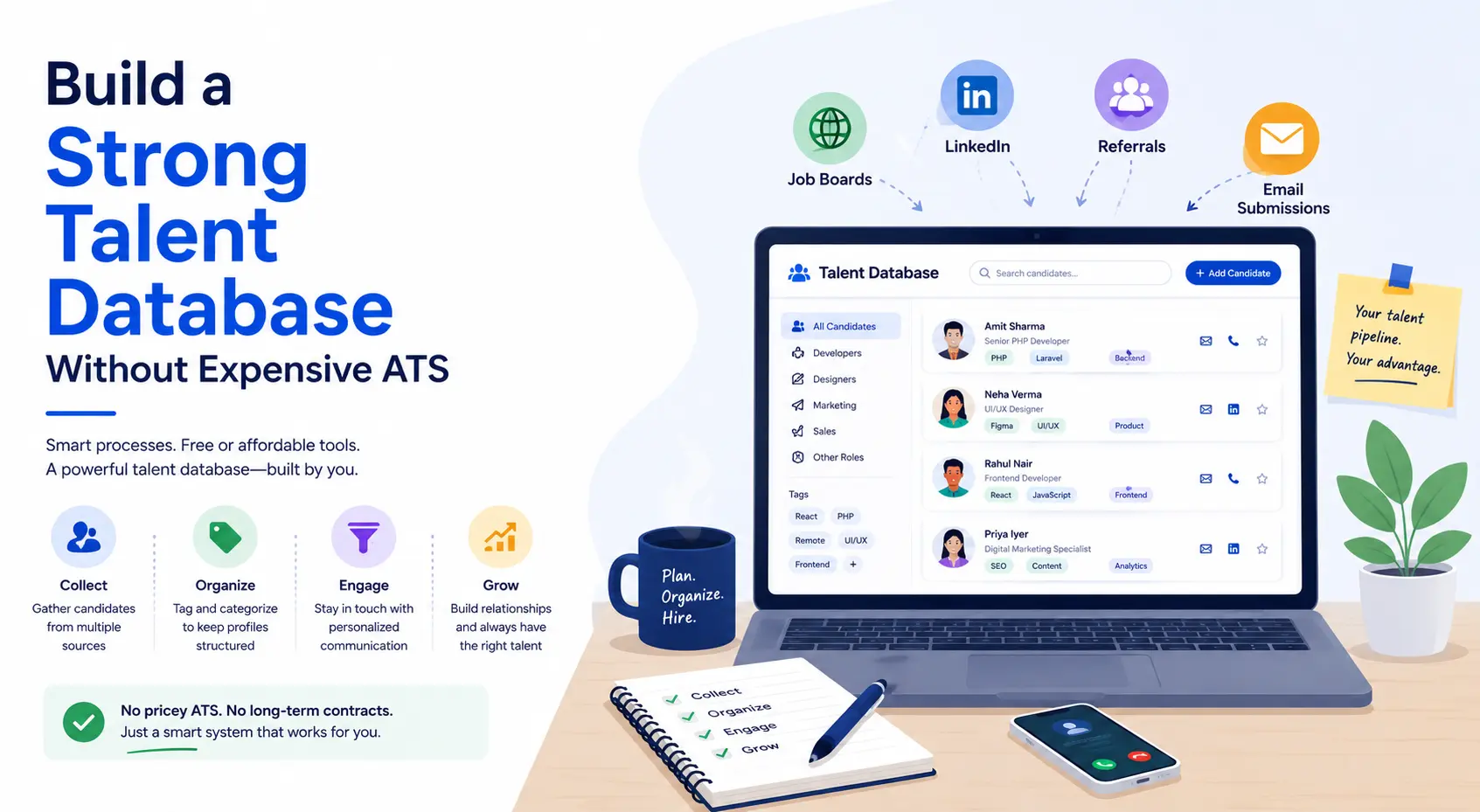
One of the biggest long-term advantages for any recruiter is owning a structured talent database.
When recruiters depend entirely on external platforms every single day, they are constantly restarting the sourcing process. But when you build your own searchable database over time, recruitment becomes faster, smarter, and more sustainable.
A good recruitment system should help recruiters:
- store resumes in one place
- add recruiter notes against candidates
- search profiles instantly
- tag candidates based on skills, industries, or seniority
- track interactions and follow-ups
- revisit old profiles quickly for new mandates
Instead of hunting for candidates repeatedly, recruiters start building long-term talent pipelines.
That database eventually becomes one of the agency’s strongest assets.
Why Simpler Recruitment Tools Work Better for Lean Teams
Smaller recruitment-focused platforms like CANSPLA are designed around actual recruiter workflows instead of enterprise complexity.
The goal is not to overload recruiters with unnecessary dashboards. The goal is to simplify everyday hiring operations.
Features that genuinely help smaller agencies include:
-
Searchable Candidate Database
Instead of storing resumes across folders, emails, and drives, recruiters can maintain a centralized candidate repository that is easy to search and revisit.
-
Candidate Tags and Labels
Recruiters can categorize candidates based on practice areas, industries, experience levels, locations, notice periods, or hiring priorities. This makes future sourcing significantly faster.
-
Recruiter Notes in One Place
Every interaction matters in recruitment. Having notes attached directly to candidate profiles removes the need to remember conversations manually.
-
Daily To-Do Tracking
A lightweight task management system helps recruiters stay aligned on interviews, follow-ups, submissions, and client priorities without switching across multiple apps.
-
Subscription and Passive Candidate Reach
One interesting shift in modern recruitment is that recruiters no longer have to chase candidates all the time.
Features where candidates can subscribe or follow recruiter updates create passive engagement channels. Candidates looking for opportunities can stay connected proactively instead of waiting for outreach.
Recruitment Is Changing — But Recruiters Are Not Becoming Obsolete
There is a growing conversation around AI replacing recruitment jobs.
But the reality is more nuanced.
AI will absolutely replace inefficient processes.
The recruiters who adapt to technology will become faster and more effective. The ones resisting operational efficiency may struggle.
Cost Efficiency Matters More Than Ever
Many smaller companies today are actively reducing operational expenses while trying to maintain hiring quality.
In that environment, investing heavily in large ATS systems may not always make commercial sense.
A focused recruitment platform can often provide:
-
lower onboarding effort
-
easier adoption
-
faster recruiter productivity
-
cleaner workflows
-
reduced operational confusion
Sometimes simplicity itself becomes a competitive advantage.
Other Lightweight Recruitment Tools Smaller Teams Explore
Apart from enterprise platforms, many growing agencies also explore simpler tools such as:
The right choice ultimately depends on team size, hiring style, workflow complexity, and budget.
Final Thoughts
Recruitment agencies do not need to operate like enterprise corporations to build efficient systems.
The future of recruitment is not about using the biggest software in the market.
It is about building smarter systems, creating strong talent databases, and using technology to make recruiters faster, sharper, and more organized every single day.